Office Phone Number:  (832) 644-8930

New Patient Appointments:  (346) 662-1220

Nuclear Stress Test: Everything You Need to Know

Have you ever wondered how doctors peek into your heart’s secret life? It’s not magic, but it could be. It’s called a nuclear stress test, and it’s like a fitness tracker for your ticker. Did you know that in the U.S. alone, a whopping 8 million of these tests are done each year? That’s a lot of hearts getting a check-up.

This test is your heart’s chance to show off its stamina, revealing how well it handles a workout. We’re going to break down everything you need to know about this test, from why you might need one to what happens during and after.

Here’s a sneak peek of what we’ll cover:

  • The lowdown on nuclear stress tests: What they are and how they work.
  • Why you might need a stress test: Who’s a good candidate for this test?
  • What to expect on test day: No surprises here.
  • Deciphering your results: What do those squiggly lines mean?
  • Your heart health journey: Next steps after your test.

But we’re not stopping there. We’ll even sprinkle in some real-life stories to show you how this test can be a game-changer. And if you’re in the Houston area, you’re in luck. Modern Heart and Vascular has a team of heart experts who can guide you through this process.
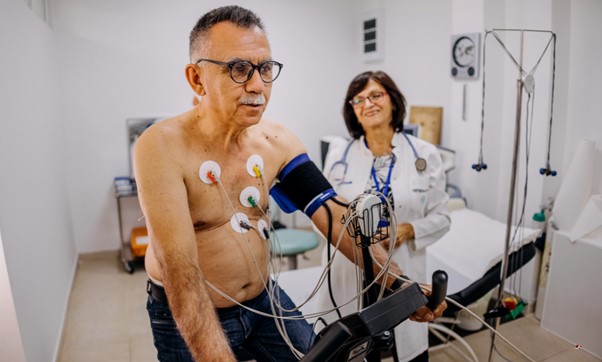
Nuclear Stress Test

Nuclear Stress Test Explained

A nuclear stress test offers a comprehensive evaluation of your heart’s function. It’s a diagnostic tool that assesses how your heart responds to physical exertion. Imagine it as a rigorous examination of your heart’s performance under stress.

How does it work? Well, it’s a two-act show, complete with a special guest:

  • Act 1: The Tracer Takes the Stage: You’ll receive a tiny amount of a radioactive tracer, usually through an IV. This tracer is like a spotlight for your heart, highlighting blood flow. Unique cameras then capture images of your heart at rest, showing how healthy blood is reaching those hardworking muscles.
  • Intermission: No popcorn here, but you’ll get a short break while the tracer does its thing.
  • Act 2: The Stress Test Challenge: Time for your heart to take center stage and show us what it’s got. You’ll hop on a treadmill or stationary bike, gradually increasing the intensity. The cameras keep rolling, capturing how your heart responds to the challenge. This second set of images reveals how well your blood is flowing when your heart is working hard.

By comparing these “before and after” images, your doctor can get a detailed look at your heart’s performance under pressure. This helps them pinpoint any potential issues, like blockages in your coronary arteries—the blood vessels that supply your heart with oxygen-rich blood. Catching these issues early can be a real lifesaver.

Are you worried about that radioactive tracer? Don’t be. The amount used is minimal and leaves your body quickly. It’s a small price to pay for a glimpse into your heart’s inner workings.

So, Why Would You Need This Heart Health Highlight Reel?

Not everyone needs a front-row seat to their heart’s performance. This test is usually reserved for those who have certain symptoms or risk factors for heart disease. It’s like a detective tool, helping your doctor uncover clues about your heart’s health.

Who might need a nuclear stress test? Here’s the VIP list:

  • Chest pain or discomfort: If you’ve been experiencing that nagging chest pain or tightness, your doctor might want to take a closer look. This test can help determine if reduced blood flow to your heart is the culprit.
  • Shortness of breath: Feeling winded after minimal effort? It could be a sign that your heart isn’t getting the oxygen it needs. A stress test can help assess your heart’s pumping power.
  • Abnormal EKG results: If your electrocardiogram (EKG) is showing some funky rhythms, a stress test can help your doctor understand what’s going on beneath the surface.
  • Other risk factors: If you have a family history of heart disease, high blood pressure, high cholesterol, diabetes, or you’re a smoker, you might be at a higher risk. A stress test can help evaluate your heart’s health and guide your treatment plan.
  • Post-procedure evaluation: If you’ve recently undergone a heart procedure, such as angioplasty or bypass surgery, a stress test can help assess its effectiveness and monitor your progress.

This test isn’t just about diagnosing problems; it’s also about preventing them. By identifying potential issues early on, you and your doctor can take proactive steps to keep your heart healthy and strong.

If you are a candidate for a nuclear stress test, don’t hesitate to talk to your doctor. They’ll help you determine if this test is proper for you and guide you through the process. And if you’re in the Houston area, the team at Modern Heart and Vascular is here to provide expert care and support every step of the way.

What to Expect on the Big Day

So, you’ve got your backstage pass to the nuclear stress test. What’s next? Well, it’s time to prep for your close-up. Don’t worry, it’s not as scary as it sounds. In fact, it’s a pretty straightforward process.

Here’s a quick rundown of what to expect:

  • Before the Show: Your doctor will give you specific instructions on how to prepare for your test. This might include fasting for a few hours before the test, avoiding caffeine, and temporarily stopping certain medications. Be sure to follow these instructions carefully to ensure accurate results.
  • The Dressing Room: When you arrive at the testing center, you’ll be asked to change into a hospital gown. Don’t worry; you won’t be walking on any red carpets in this outfit.
  • Getting Mic’d Up: Small sticky patches called electrodes will be placed on your chest to monitor your heart’s electrical activity during the test. Think of it as your heart’s sound system.
  • The Tracer Takes the Stage: You’ll receive a small amount of the radioactive tracer through an IV. It’s quick and painless, like a tiny pinprick.
  • Act 1–Resting Heart Rate: You’ll lie down on a table while the camera captures images of your heart at rest. It’s your chance to relax and catch your breath before the main event.
  • Act 2–Showtime: Now it’s time for the stress test itself. You’ll start by walking slowly on a treadmill or pedaling a stationary bike. The speed and incline will gradually increase, simulating exercise. Don’t worry if you’re not a fitness buff – the goal is to get your heart rate up, not to break any records.
  • The Grand Finale: The test will end once your heart rate reaches a certain level or if you experience any symptoms. You’ll be monitored for a short period afterward to make sure everything is okay.

The whole process usually takes about 3 to 4 hours, but the actual stress test itself is only about 10 to 15 minutes. It’s a small investment of time for valuable insights into your heart’s health.

Understanding the Results

After your nuclear stress test, it’s time for the big reveal: the results. But don’t worry, you won’t be left in suspense for long. Your doctor will typically discuss your results with you soon after the test, sometimes even the same day.

So, what do those squiggly lines and colorful images mean? Here’s a simplified breakdown:

  • Normal Results: If your heart shows good blood flow at rest and during exercise, that’s great news! It means your heart is functioning well under pressure, and there are no significant blockages in your coronary arteries.
  • Abnormal Results: If the test reveals reduced blood flow to your heart during exercise, it could indicate a blockage in one or more of your coronary arteries. This doesn’t necessarily mean you have heart disease, but it warrants further investigation. Your doctor may recommend additional tests, such as a coronary angiogram, to get a clearer picture of your heart’s health.

Interpreting your nuclear stress test results is not a DIY project. Your doctor will consider your medical history, symptoms, and other factors to determine the best course of action. Depending on your individual needs, they may recommend lifestyle changes, medications, or further testing.

Next Steps After Your Test

After the curtain call of your nuclear stress test, it’s time to map out your next steps. Depending on the results, your journey might take a few different paths. But no matter what, remember that you’re not alone. Your doctor is your co-pilot, guiding you toward a healthier heart.

Here’s what you can expect:

  • Smooth Sailing: If your results are normal, congratulations! Your heart is in tip-top shape. Keep up the excellent work with a healthy lifestyle, regular exercise, and a balanced diet. Your doctor might recommend some follow-up appointments to monitor your progress, but overall, you’re in the clear.
  • A Few Bumps in the Road: If your results are abnormal, don’t panic. It doesn’t necessarily mean you have heart disease, but it does warrant further investigation. Your doctor may recommend additional tests, such as a coronary angiogram, to get a closer look at your coronary arteries. Depending on the findings, they may suggest lifestyle changes, medications, or other treatments to improve your heart health.

By taking an active role in your care, asking questions, and following your doctor’s recommendations, you can ensure a healthier future.

Ready to Show Your Heart Some Care?

The nuclear stress test might sound a bit sci-fi, but it’s a powerful tool for keeping your heart in tip-top shape. It’s like giving your ticker a starring role in its health movie.

Here’s a quick recap:

  • What it is: A high-tech imaging test that checks your heart’s blood flow under stress.
  • Why you might need it: Chest pain, shortness of breath, abnormal EKG results, or other risk factors.
  • What to expect: A two-part test involving a radioactive tracer and exercise.
  • The results: Your doctor will explain what they mean and discuss the next steps.

If you’re looking for expert guidance on your heart health journey, Modern Heart and Vascular is here for you. Our team of specialists can help you navigate the ins and outs of nuclear stress tests and create a personalized plan to keep your heart healthy and strong.

Modern Heart And Vascular

Our cardiovascular center is dedicated to heart health and helping our patients manage vascular and heart-related conditions.
Modern Heart and Vascular logo

CARDIOVASCULAR CENTERS IN HOUSTON, TEXAS

Modern Heart and Vascular, a preventive cardiology medical practice, has several offices around Houston. We have locations in Humble, Cleveland, The Woodlands, Katy, and Livingston.

We are Modern Heart and Vascular Institute, a diagnostic and preventative medicine cardiology practice.

Every heart has a story… What’s yours?

Book an Appointment Today

At the Modern Heart and Vascular Institute, we offer state-of-the-art cardiovascular care with innovative diagnostic tools and compassionate patient care. Our priority at Modern Heart and Vascular Institute is prevention. We help patients lead healthier lives by avoiding unnecessary procedures and surgeries.

Contact us online to learn more and book an appointment. If you’d like to learn more about our practice, read our providers’ bios.

This article does not provide medical advice. It is intended for informational purposes only. It is not a substitute for professional medical advice, diagnosis, or treatment. If you need cardiovascular care, please call us at 832-644-8930.

Modern Heart And Vascular

All Modern Heart and Vascular content is reviewed by our team before publication. While the educational information we provide is intended to be accurate, this content is not a substitute for a consultation with a doctor to address your unique symptoms and establish a treatment plan.

Request an
Appointment

Every heart has a story…What’s yours?
Choose your appointment at one of our 7 locations