
Office Phone Number: (832) 644-8930
New Patient Appointments: (346) 662-1220
¿Qué es un marcapasos y cómo funciona?
El origen del primer dispositivo marcapasos.
Existen diversas teorías sobre el origen del primer marcapasos que haya existido, sin embargo, todas ellas coinciden en numerosos datos. Empezando por el año de 1958, en Estocolmo, donde el cirujano cardíaco Dr. Senning, realizó una estimulación cardíaca sobre un paciente llamado Larsson, a través de dos cables suturados al epicardio y un generador.
Pero bien, el primer marcapasos cardíaco fue inventado en 1941 por John Hopps, un ingeniero canadiense que investigaba los efectos del calentamiento por radiofrecuencia sobre hipotermia.
Su investigación reveló que, si el corazón dejaba de latir cuando su temperatura disminuía, era posible reanudar la actividad cardíaca de modo artificial, a través de estimulación eléctrica o mecánica. Años después, en 1949, sus estudios le permitieron desarrollar la primera máquina de desfibrilación cardíaca, máquina que logró poner en marcha el corazón de un canino. Ya en el año de 1950, mediante diversas investigaciones realizadas con caninos, John Hopp crea el primer dispositivo marcapasos.
Según estudios, la investigación de la estimulación eléctrica cardíaca tiene ya más de 50 años de evolución clínica. Incluso desde los veintes, existían algunos fenómenos indispensables para su comprensión al realizar una intervención con marcapasos. Algunos eran:
Fue en 1952 que llegó a Estados Unidos, la primera referencia de tratamiento con éxito en un paciente con marcapasos cardíaco. Sin embargo, en ese entonces, el marcapasos estaba situado en el cuerpo de manera externa y la corriente eléctrica conducida hacia el corazón se realizó mediante sondas o agujas. Ya en 1958, el ingeniero eléctrico norteamericano, Wilson Greatbatch, inventa el primer marcapasos cardíaco implantable.
Our heart is an organ of utmost importance for the life of our body. It is approximately the size of a fist and is responsible for pumping blood throughout our body. Understanding how it works will guide us to understanding its relationship with a pacemaker.
As is known, the heart is located at the center of the circulatory system, a system made up of a network of blood vessels (arteries, veins and capillaries), which transports blood from all parts of the body. In the heart, especially, there are valves that are responsible for keeping blood flowing in the proper direction.
Now, our heart has, in turn, an electrical system that controls the frequency and rhythm of our heartbeat. A healthy heart is capable of supplying the correct amount of blood to the entire body, using the necessary frequency.
When a disease or illness injures or weakens the heart, it does not function normally, preventing the organs of our body from receiving enough blood to carry out their functions. Damage caused to the electrical system of the heart (or, also, caused to the nervous system or endocrine system – which controls heart rate and blood pressure), as a consequence, makes it difficult for the heart to pump blood.
The function of the pacemaker is precisely to support the heart that is weakened.
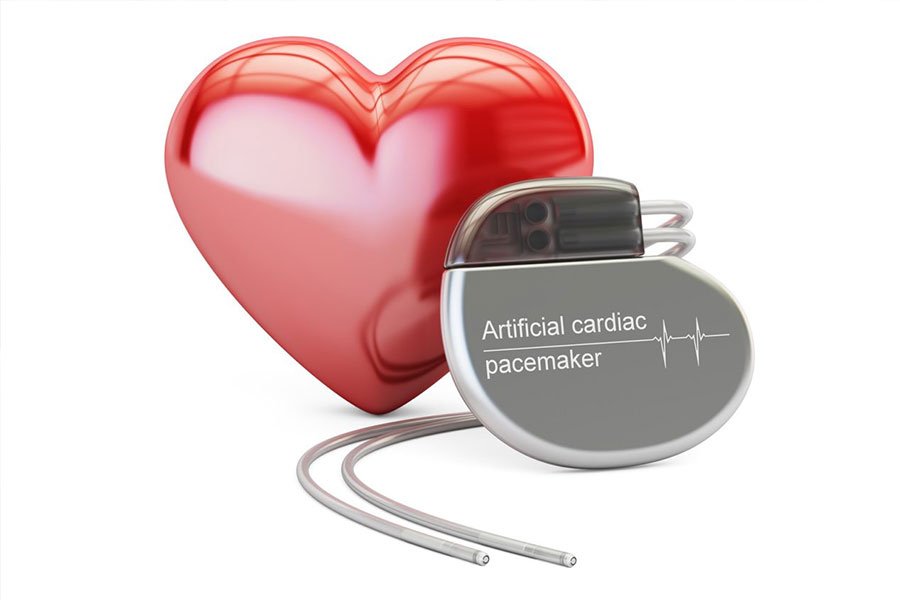
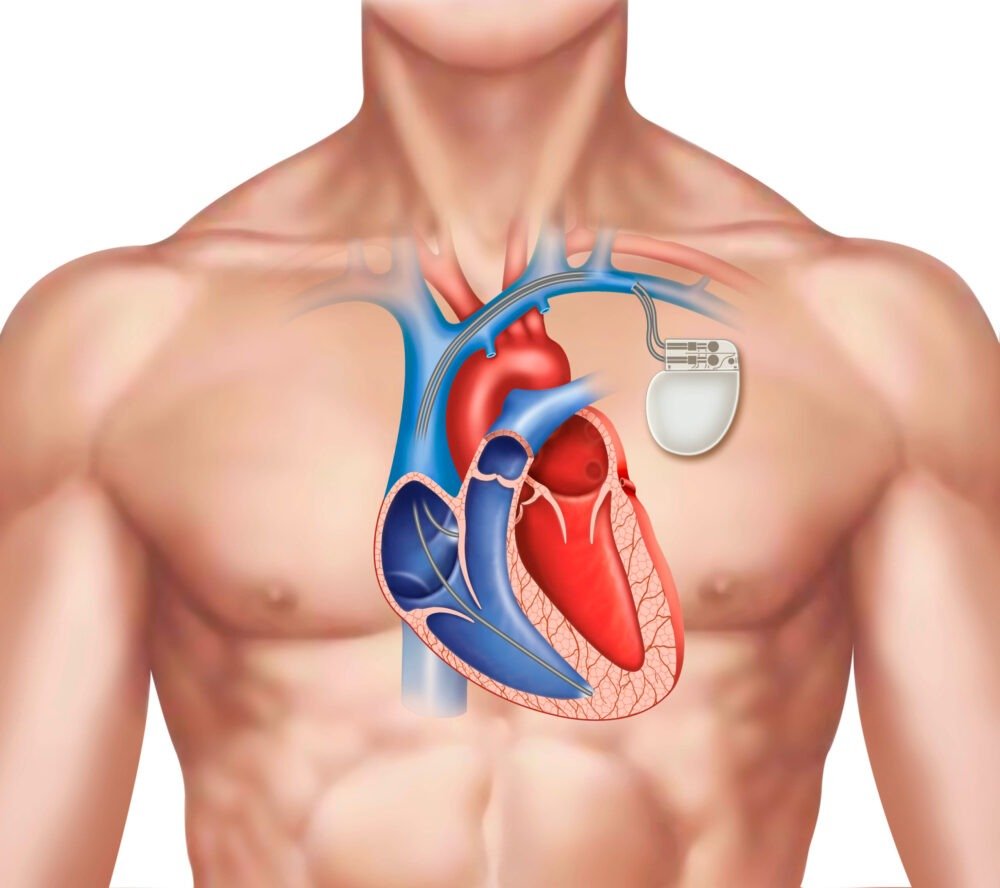
Pacemakers are small devices that use low-energy electrical impulses to control and stimulate the heart rate and rhythm (heartbeat). Pacemakers have also been described as implanted electronic “clocks.”
There are traditional pacemakers, which send these electrical impulses through cables. Currently, there are also wireless pacemakers, a more recent model that does not require cables and can achieve the same stimuli.
The pacemaker has various very beneficial functions and purposes, since it is an electronic device that allows the electrical activity of the heart to be recorded in order to manage the electrical current that emanates when it detects that there is no heartbeat.
Three types of pacemakers are generally known:
A different type of electrical stimulation device is known, called an implantable automatic defibrillator or implantable cardiodefibrillator, whose function is to prevent sudden death through the application of an electric shock in the event of malignant ventricular arrhythmias.
Generalmente, los marcapasos son empleados para tratar algunos tipos de arritmias, por ejemplo, la insuficiencia cardíaca (cuando el corazón tiene dificultades para bombear sangre suficiente en todo el cuerpo). Sin embargo, no en todos los casos provocados por esta condición, es realmente necesario usar un marcapasos.
Una de las causas por las cuales es recurrente utilizar un marcapasos como apoyo, es cuando el corazón late muy lento (bradicardia), o bien, los latidos cesan por completo, provocando que la persona sufra desmayos y otros síntomas.
Además de regular la bradicardia, en algunos otros casos, el marcapasos también es empleado para prevenir o regular un latido cardíaco irregular y agitado (taquicardia).
Some of the problems that also cause an irregular heartbeat can be caused by:
In addition to helping regulate an irregular heartbeat, pacemakers can also be used to support the chambers of the heart, prompting them to beat in sync in case the heart is not pumping enough blood through the body. Some of the causes of this irregularity in blood pumping may also be the result of some congenital heart diseases, a heart attack, heart failure, or even that the heart muscle has enlarged, making it difficult to pump blood, which is expelled from the ventricles.
The pacemaker implantation process should be performed by a heart specialist and, of course, finding the right cardiologist, who can guide you through this pacemaker placement process safely, is essential.
At Modern Heart and Vascular, we are interested in your health and passionate about helping our patients understand their options, to help them make the best decisions for their heart health. Our specialist cardiologists use the most advanced technology with the intention of offering you care focused on your heart condition, including placement of pacemakers for the treatment of arrhythmias and heart failure.
Learn more by talking to a cardiologist about your options and whether a pacemaker is right for you. Contact us online, make an appointment and ask us all your questions.


CENTROS CARDIOVASCULARES EN HOUSTON, TEXAS
Modern Heart and Vascular, una práctica médica de cardiología preventiva, tiene varias oficinas en Houston. Tenemos ubicaciones en Humble, Cleveland, The Woodlands, Katy y Livingston.
Somos Modern Heart and Vascular Institute, una práctica de cardiología de medicina preventiva y de diagnóstico.
Cada corazón tiene una historia… ¿Cuál es la tuya?
Reserve Una Cita Hoy
En el Modern Heart and Vascular Institute, ofrecemos atención cardiovascular de vanguardia con herramientas de diagnóstico innovadoras y atención compasiva al paciente. Nuestra prioridad en Modern Heart and Vascular Institute es la prevención. Ayudamos a los pacientes a llevar vidas más saludables al evitar procedimientos y cirugías innecesarias.
Contáctenos en línea para obtener más información y reservar una cita. Si desea obtener más información sobre nuestra práctica, lea las biografías de nuestros proveedores.
Este artículo no proporciona consejos médicos. Se pretende unicamente con fines informativos. No es un sustituto del consejo, diagnóstico o tratamiento médico profesional. Si necesita atención cardiovascular, llámenos al 832-644-8930.
Every heart has a story…What’s yours?
Choose your appointment at one of our 7 locations